 Hybrid Manager
Play online
How to play
Hybrid Manager is a hybrid training management game. Run a box: train your athletes, pick their tactics, sign new ones, promote kids from the academy, upgrade your facilities and hire a coaching staff. The goal is to climb from the National Division to the World Division and win the Hybrid Games.
How it works
Your box competes against other managers' boxes and the AI clubs. A season lasts one real week and the competitions play themselves on schedule, with whatever training plan and tactics you have set. One box per account.
The online week
Each season starts on Monday at 00:00 and ends on Sunday.
| Day | What's played | Time |
|---|---|---|
| Monday to Thursday | Two league WODs a day | 12:00 and 21:00 |
| Friday | WOD 9 and WOD 10, worth double points | 12:00 and 21:00 |
| Saturday | Play-off: WOD 1 and 2 · Hybrid Games: WOD 1 and 2 | Play-off 12:00 and 18:00 · Games 13:00 and 19:00 |
| Sunday | Play-off: WOD 3, 4 and 5 · Hybrid Games: WOD 3, 4 and 5 | Play-off 12:00, 15:00 and 18:00 · Games 13:00, 16:00 and 19:00 |
Each WOD lasts 10 minutes and each division plays 10 minutes after the one before: National at 12:00, Continental at 12:10 and World at 12:20. The same goes for the evening and the play-off. The Hybrid Games are World Division only, so they start on the hour. All times are Spanish time (Madrid).
Competitions play themselves with the training plan and tactics you have set at that moment.
Divisions and clubs
The league is a pyramid of three divisions with groups of 16 boxes, 112 in total:
| Division | Groups | Boxes |
|---|---|---|
| World | 1 | 16 |
| Continental | 2 | 32 |
| National | 4 | 64 |
Whatever division you start in, everyone starts the same way: with the garage (unit 1) and 300 ◎. During your first two seasons at the club (the week you join and the next), the league also pays you a 25 ◎ starter grant every day. The first box name change is free and later ones cost 100 ◎; renaming an athlete costs 25 ◎.
The pyramid is always full. Every slot without a manager is run by an AI club, and the higher the division, the stronger they are. When you create your account you take over one of those clubs in the National, Continental or World Division, while there are slots left, and you keep its athlete and its points for that season.
AI clubs don't improve during the season. A manager who trains well, upgrades the box and rotates athletes almost always ends up above them.
Nor do they all decide the same. Each group has smart clubs, which arrive rested, pick the execution that suits their technique and only push when they won't blow up; average clubs; and weak clubs, which arrive tired and push blindly. The higher you go, the smarter they are: the World has 3 smart and 4 weak clubs per group, the Continental 3 and 6, and the National 2 and 8.
Promotion, play-off and relegation
When the league closes on Friday night, your place in the group decides what happens next:
| Place | World | Continental | National |
|---|---|---|---|
| 1st to 3rd | Hybrid Games | Promoted | Promoted |
| 4th to 6th | Hybrid Games | Promotion play-off | Promotion play-off |
| 7th and 8th | Hybrid Games | Relegation play-off | Stay in the National |
| 9th and 10th | Relegation play-off | Relegation play-off | Stay in the National |
| 11th to 16th | Relegated | Relegated | Stay in the National |
That way almost every box has something to play for each week. Nobody goes down from the National because it's the entry division; once the Regional opens, the bottom of the National will be relegated too.
The numbers add up between each pair of divisions. There are twice as many groups below, so for each group above, six boxes go straight down (11th to 16th) and six come up (the top three of its two groups below). The play-off has as many places in the upper division as upper-division boxes playing it, so every division keeps 16 boxes per group.
The play-off
It's a stage where boxes from above and below all play together. Between the World and Continental it's eight boxes for two places: 9th and 10th of the World and 4th to 6th of the two Continental groups. Between the Continental and National it's twenty boxes (7th to 10th of the two Continental groups and 4th to 6th of the four National groups) for eight places, in two stages of ten with four places each. The stages are seeded by league position: stage A puts the Continental 7ths and 8ths with the six worst from the National (the 6ths and the two 5ths with fewest points), and stage B puts the Continental 9ths and 10ths with the National 4ths and the two best 5ths. Before Saturday, League › Play-off shows how the phases would look if the league ended now; and at the weekend Home shows your division's play-off (or the Hybrid Games if you play them).
Five WODs are played: two on Saturday (12:00 and 18:00) and three on Sunday (12:00, 15:00 and 18:00). The points are added up and those who finish in the places play in the upper division next season, whichever division they came from. The rest play below.
The Hybrid Games
The top eight of the World Division play five WODs, an hour after each play-off WOD: two on Saturday (13:00 and 19:00) and three on Sunday (13:00, 16:00 and 19:00). They share a huge prize from the prize pool.
Points
Each WOD awards points by place. Friday's WODs are worth double.
| Place | 1st | 2nd | 3rd | 4th | 5th | 6th | 7th | 8th | 9th | 10th | 11th | 12th | 13th | 14th | 15th | 16th |
|---|---|---|---|---|---|---|---|---|---|---|---|---|---|---|---|---|
| Points | 100 | 96 | 92 | 88 | 82 | 76 | 70 | 64 | 56 | 48 | 40 | 32 | 24 | 16 | 8 | 0 |
All-time ranking
Besides each week's league there is an all-time ranking, one for boxes and one for athletes. You'll find it under Competition › All-time ranking, and every athlete and box shows its position on its card and in its history.
| Achievement | National | Continental | World |
|---|---|---|---|
| Win your league group | 2 | 4 | 30 |
Winning the Hybrid Games is worth 50 points. Only titles score: winning a WOD gives no points, although it's counted and breaks ties. What really moves you up the ranking is the World division and the Games.
Points for winning the group or the Games go to the athlete who did the most WODs for the box that season. A box adds up everything its athletes win with it, so if an athlete moves to another club, what they won stays with their old box and they keep their own total. If you took over an AI club, what that club did that week counts for you. On equal points, more league titles rank higher, then more WODs won.
Athletes
Qualities
- Strength: thrusters, deadlifts, sled and sandbag.
- Weightlifting: snatch, clean & jerk and overhead squat.
- Gymnastics: pull-ups, muscle-ups, handstands and rope.
- Engine: row, run, bike and burpees. It also helps in every movement and holds up better at the end.
- Technique: double unders and handstand walks, and it adds a little to everything.
- Mindset: fewer bad days and less risk of blowing up. It only improves by competing.
Each WOD mixes movements and each one calls for a quality. The average sums up all six. When an athlete appears, their average is fixed but the split between qualities is random: one gets lots of strength and little engine, another the opposite.
Stars
Stars are the athlete's potential: how far they can go. They don't make them perform better in a WOD, that depends only on their qualities. What they change is how much they can improve.
| Stars | Potential |
|---|---|
| ★ | Under 60 |
| ★★ | 60 to 69 |
| ★★★ | 70 to 79 |
| ★★★★ | 80 to 87 |
| ★★★★★ | 88 or more |
- Improvement. Each quality improves less the closer it gets to their potential plus 12, both in training and in competition. With 70 strength, a five-star athlete (potential 88) still has 30 % of the way to go; a two-star athlete (potential 60) has only 3 %, and barely improves.
- Academy. An academy athlete's qualities never go above their potential.
- Price. The more potential they have above their average, the more they are worth on the market.
- Injuries. Each injury takes 1.5 potential away for good, so they can lose a star.
- Head coach. You always see the stars of your own athletes and academy athletes. For outside athletes (free agents and other managers' athletes) you need a head coach: with one or two stars you see a range (for example, two to three) and with three or more, the exact number.
Character
Each athlete has a character. It shows when they compete and when it's time to retire:
- Loyal: every time they compete, team morale goes up. Agrees to stay one more year 80 % of the time.
- Calm: hardly ever has a bad day and makes 10 % fewer no-reps. Agrees to stay 65 % of the time.
- Cocky: rises to the occasion in the play-off and the Hybrid Games (+3 % pace), but blows up 20 % more when pushing. Agrees to stay 20 % of the time.
- Hothead: 3 % faster when pushing, but makes 15 % more no-reps. Agrees to stay 15 % of the time.
WOD length
There are 2-to-4-minute sprints and short, medium and long WODs of up to 30 minutes. The longer the WOD, the higher the risk of blowing up when pushing. From minute 4 the pace starts to drop, less the more engine the athlete has. The calendar shows how long each one lasts, and the exact numbers are in Mechanics.
Potential and age
The stars show how far an athlete can go. Online, they turn one year older every four seasons. Young athletes improve faster (up to 23); from 30 they improve less, and from 31 they lose a little at each birthday. Retirement is announced a year in advance and you can try to talk them into staying: if they agree, their wage doubles and they can no longer be released or sold. Loyal and calm athletes agree more often; cocky ones and hotheads hardly ever do.
Injuries and substitutes
If the competing athlete is injured, the best healthy substitute in your squad steps in. The substitute becomes your starter, and the injured athlete stays on the bench once recovered. If you have no healthy substitute, they compete injured and perform much worse, although the injury does not get longer.
Training and fatigue
Online you can train once per training day, which runs from 13:00 to 13:00 Spanish time in winter (14:00 to 14:00 in summer). You have to press "Train now": all your athletes train with their hours plan per quality. If you don't train, they rest that day and don't improve.
Every training day fatigue drops 24, plus 3 for each physio level, whether you train or not. Each hour of training adds 2.4: with 10 hours, for example, it adds 24 and stays the same. With 0 hours there is no injury risk. You can set up to 6 hours per quality, 30 a day. Every Monday, when the season starts, every athlete's fatigue drops 50; injured ones stay out.
The more hours an athlete trains, the more they improve and the more fatigue they build up. Fatigue slows the pace in WODs and, above 50 %, raises the injury risk. Every WOD adds fatigue depending on the pace: steady adds nothing, fast start or save it for the end adds 2, and all out adds 5. Competing also improves the qualities each WOD called for a little, and it's the only way to raise mindset. In the play-off athletes improve a bit less than in the league, and in the Hybrid Games they don't.
Injuries
An injury rules the athlete out for a few days and takes something off one quality. It also leaves after-effects:
- For the next 14 training days they improve 40 % less. If they get injured again, another 14 days are added.
- Their potential drops a little for good with each injury, so their ceiling ends up lower.
- From the third injury, the chance that they announce their retirement goes up 8 % per injury each year, whatever their age. With 5 injuries it's 24 % a year, and from age 33 it's added to the age-based chance.
Game mechanics
Loading the guide…
Tactics
Who competes and with what
Each WOD is played with whatever you have set at that moment: your starter, their kit, and your pace and execution. You change it in Training & tactics and save it with the button. What you save counts for the next WOD and the ones after until you change it, so if you want something different for a WOD you have to set it before it's played. League WODs are known from Monday, and the play-off and Games WODs once the league closes. Fatigue, experience and the improvement from competing go to whoever competes.
You choose one pace for the whole WOD: steady, fast start, all out or save it for the end. Each one decides in which movements the athlete eases off, holds or pushes: pushing runs at 110 % of your pace, holding at 98 % and easing off at 95 %. When pushing, fatigue within the WOD builds up 60 % faster and there are 40 % more no-reps; holding gives 25 % fewer no-reps, and easing off 40 % fewer while fatigue barely builds, so easing off early leaves more in the tank for the end. Pushing can make the athlete blow up, after which they go much slower until the next movement where they ease off. The risk depends on engine and mindset.
No tactic beats another: what matters is the shape your athlete is in. Before each WOD you choose two things.
Pace
Pushing is faster but can make the athlete blow up. The risk goes down with engine and mindset and up with fatigue and the length of the WOD.
Execution
- Clean reps: 3.5 % slower, but almost no no-reps.
- Normal: the usual pace and technique.
- Go fast: 6 % faster, but the judge calls two and a half times more no-reps.
Every no-rep has to be repeated and costs about 2.5 seconds. Running, rowing, assault bike and sled push have no no-reps: they're measured in metres or calories. They come up more the worse the athlete's technique and the more tired they are, above all in gymnastics and weightlifting, and pushing in a movement multiplies them. AI clubs also choose their execution.
The replay of each WOD shows the no-reps in every lane.
Squad and academy
- First team: it holds as many athletes as your unit's level plus one. The active one competes.
- Releasing someone costs four days of their wage.
Academy
You don't start with an academy: it's a facility you open and upgrade over five levels. Each level adds one place for kids aged 16 to 18. You fill the places by signing academy kids, and each signing costs money. Their potential is drawn by chance according to the academy level:
| Level | Signing price | 1 star | 2 stars | 3 stars | 4 stars | 5 stars |
|---|---|---|---|---|---|---|
| 1 | 200 | 100 % | ||||
| 2 | 500 | 90 % | 10 % | |||
| 3 | 1,200 | 70 % | 25 % | 5 % | ||
| 4 | 2,500 | 50 % | 30 % | 15 % | 5 % | |
| 5 | 5,000 | 30 % | 30 % | 25 % | 12 % | 3 % |
While in the academy they earn no wage and improve a little every day you train, never above their potential. To move up to the first team they must have played a Teens Games and be 18; if they turn 19 without having played one, they retire. Opening the academy and upgrading it costs 150, 500, 1,500, 4,500 and 11,000 ◎.
With an analyst, each of their stars moves 4 probability points from the lowest stars to the highest your academy allows: with a five-star analyst and the academy at level 5, a five-star kid comes out 23 % of the time instead of 3 %.
Teens Games
The Teens Games are the academy tournament: one WOD every day from Monday to Saturday at 10:00; Sunday is the changeover day. Eight academy athletes play, one per box, and empty lanes are filled by AI academy athletes. Points add up as in the league and the final podium gives the box reputation (3, 2 and 1).
- Places are auctioned during the previous week: each box has one bid, of at least 50 ◎. You can raise it whenever you like but never lower or withdraw it, and the money is held from your cash. At midnight on Sunday the 8 highest bids get in and the rest are refunded.
- All the money raised goes to the tournament's prizes: 40 % as daily prizes by place in each WOD and 60 % at the end, by the standings. It's split with the curve 30, 20, 15, 11, 9, 7, 5 and 3 % among the boxes that play; the AI academy athletes' share is shared among the boxes.
- You choose the academy athlete who plays on its screen; if you don't, the one with the most potential plays. If you have no academy athlete on Monday, your place stays empty and the bid isn't refunded.
- Each tournament WOD makes the academy athlete improve more than a training day, never above their potential.
- To move up to the first team, an academy athlete must have played a Teens Games and be 18. Until then they don't compete in the league, play-off or Games. If they turn 19 without having played one, they retire.
Market and transfers
- Free agents: each division always has six up for auction, replaced as auctions close, and you can bid in any division. They start at 60 % of their value and each bid must be at least 5 % higher. Your bid is held from your cash and refunded the moment someone outbids you. A bid in the last 10 minutes extends the auction by 10 minutes. Without a head coach you can't see their potential.
- Transfers between managers: you can auction any athlete who isn't competing for 12, 24 or 48 hours, from a minimum price of 10 % of their value; while nobody has bid, you can withdraw them. If someone signs them, you get 88 % and 12 % goes to the prize pool; if nobody does, they return to your squad.
Morale and experience
- Box morale: it starts each season at 80. It goes up 2 when you finish in the top quarter of a WOD and down 2 when you finish in the bottom quarter; in the play-off and the Games your place in the running standings counts. Above 80 you perform a little better, and below it, worse.
- Experience: athletes from the academy or who have barely competed are rookies. Below 10 experience they perform 25 % worse, and up to 40, 10 % worse. Every WOD adds experience.
- Debt: if your cash is negative, your athletes perform 15 % worse. After seven days in the red the board sacks you and the club goes back to the AI; you can pick another one to start again.
The box
There are five units, from the garage to the high-performance centre. A bigger unit costs more rent, lets your zones go up to higher levels and fits more athletes and more members.
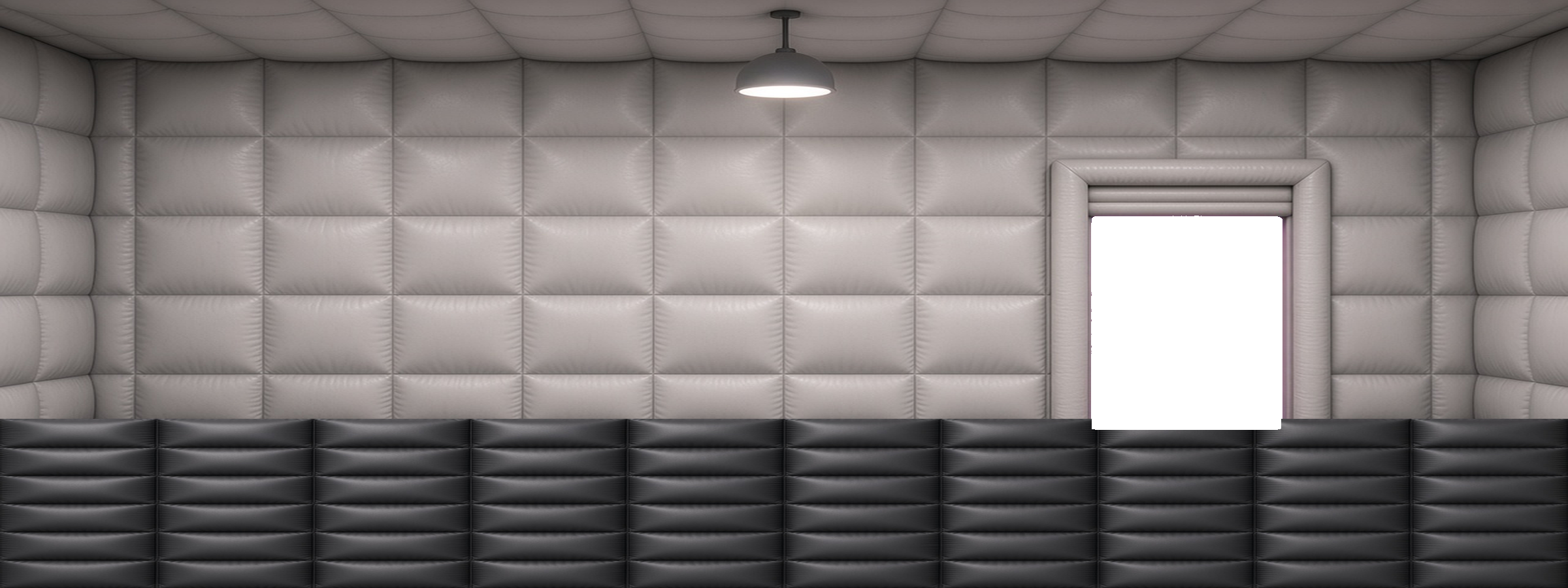

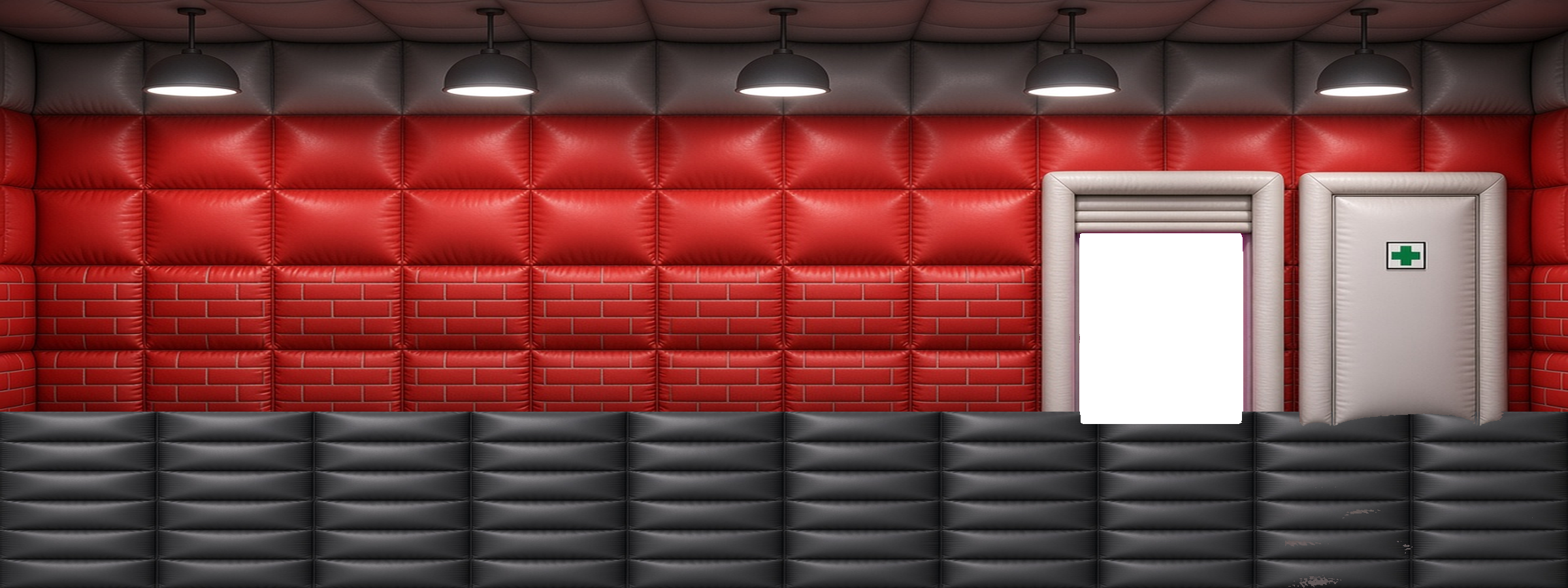
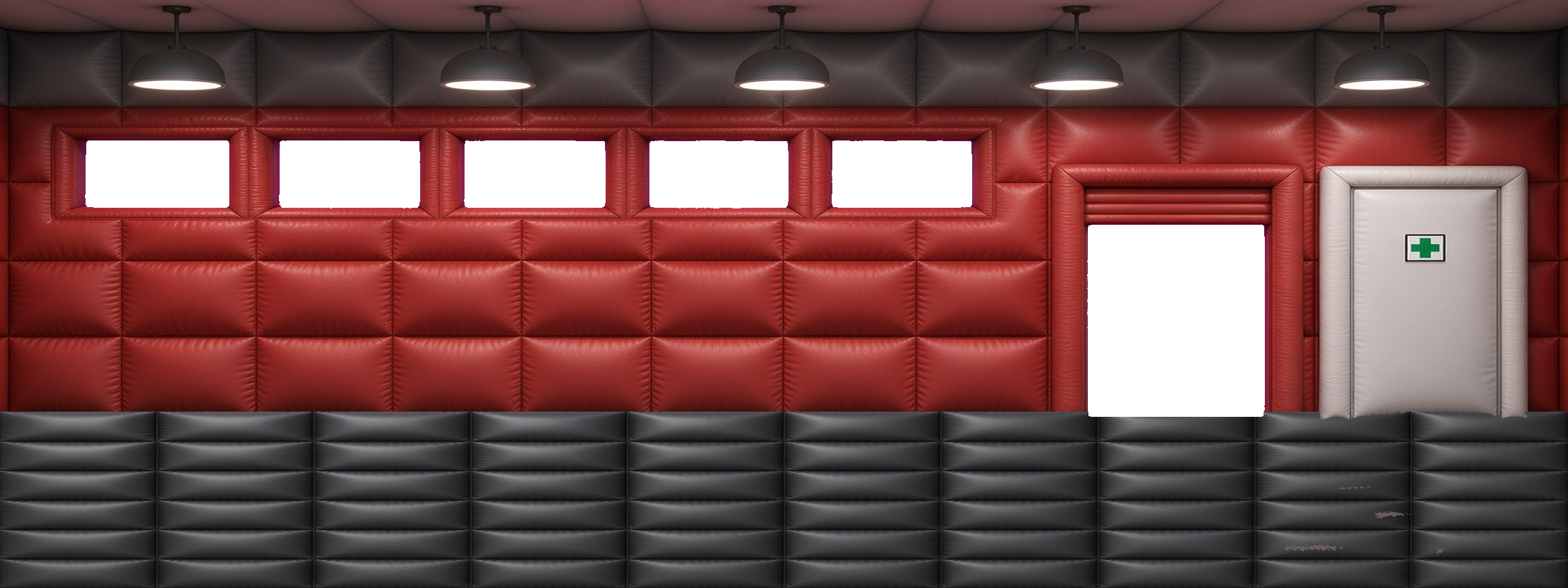
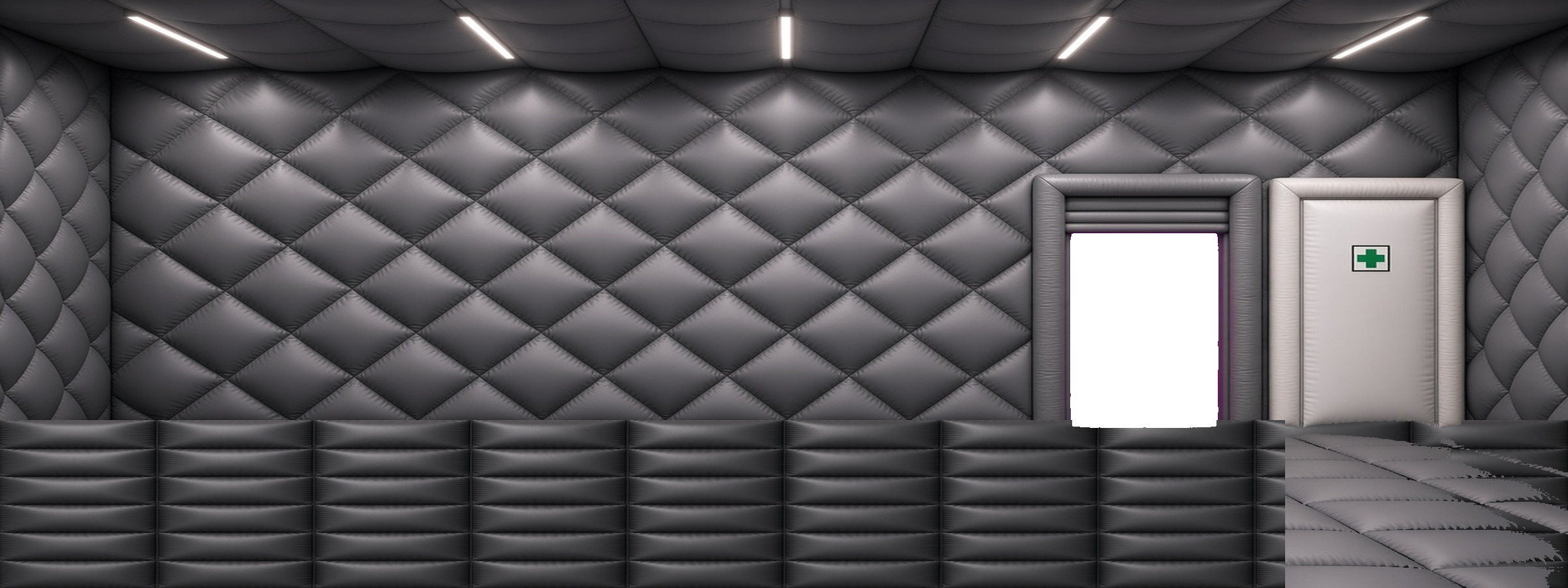
Each of the five zones has five levels: weightlifting and gymnastics (+10 % improvement in their qualities per level), cardio (+12 % in engine), equipment (+5 % in technique and strength) and physio & recovery (less fatigue and fewer injuries, with a daily cost).
Locker room
Each athlete has a locker. Whatever you buy stays there and they put it on whenever you want, without paying again. Each item has three levels: basic, pro and elite.
- Fixed kit, always on: shoes (a bit faster at everything), wristbands (gymnastics and fewer no-reps on the bar and rings), jump rope (double unders and fewer technique no-reps) and T-shirt (morale and a few more members).
- Strategy kit, which you put on or take off before each WOD: grips (better at gymnastics, a bit worse at weightlifting), lifting belt (better at weightlifting and strength, worse at gymnastics) and knee sleeves (better at leg movements, worse at cardio).
League WODs are known from Monday; the play-off and Hybrid Games WODs from Friday, one day before they start; and the six Teens Games WODs from the Sunday before (the Teens Games screen shows them that Sunday). What the athlete is wearing when the WOD is played is what counts; you change it in Training & tactics.
Nutrition
In Nutrition you buy as many consumables as you want and they are stored in the box inventory. From there you give them to an athlete whenever you like. Each athlete can only take one at a time: when the effect wears off, you can give them another.
| Consumable | Effect | Duration | Price |
|---|---|---|---|
| Protein shake | +2 % improvement across all training | 5 training days | 15 ◎ |
| Creatine | +5 % improvement in strength and weightlifting | 6 training days | 25 ◎ |
| Magnesium and oats | +5 % improvement in gymnastics and technique | 6 training days | 25 ◎ |
| Sports drink | +5 % improvement in engine | 6 training days | 20 ◎ |
| Full nutrition pack | +4 % improvement across all training | 7 training days | 60 ◎ |
| Tart cherry juice | Takes 15 fatigue away | Immediate | 20 ◎ |
| Collagen and bone broth | Takes one day off an injured athlete's layoff | Immediate | 35 ◎ |
| Pre-workout | +3 % performance in their next WOD | Their next WOD | 20 ◎ |
- Training items only use up a day when the athlete trains. If you skip a day, the effect is still there for the next one.
- The pre-workout also counts as the consumable they are taking until they play their WOD.
- Tart cherry juice and collagen work instantly and don't count towards that limit; collagen can only be given to an injured athlete.
- The pre-workout is used up in the next WOD that athlete plays (league, play-off or Games).
Members
Your box has places for people who train there and pay a weekly fee. The number of places depends on the unit: 10 in the garage, 40 in the street-front unit, 120 in the industrial unit, 300 in the unit with yard and 600 in the high-performance centre.
- You set the fee in Facilities, between half and double the standard fee for your division (from 4 ◎ in the National to 6 ◎ in the World).
- How many people want to join depends on your reputation, your division, team morale and the level of your facilities. A high fee scares people off and a low one draws more in.
- Each day, part of the gap between the members you have and the ones who'd like to join either signs up or leaves. Fees are collected every Monday, when the season starts, at the lowest fee you had during the previous week.
Coaching staff
Each role goes from one to five stars and is paid a daily wage. None of them tells you what to do: they give you information or improvements, and the decision is yours.
| Head coach | Analyst | Strength, gymnastics and engine coaches | |
|---|---|---|---|
| ★ | Explains each WOD afterwards with 1 reason, sees outside athletes' potential as a range and, before each WOD, tells you its type, length and the quality that matters most | Moves 4 probability points from the lowest academy stars to the highest your academy level allows | +8 % improvement in their qualities |
| ★★ | The report gives 2 reasons; tells you the fatigue your athlete arrives with | 8 points | +16 % |
| ★★★ | Sees exact potential; gives the chance of blowing up when pushing the whole WOD | 12 points | +24 % |
| ★★★★ | Gives the expected no-reps with technique, normal and fast execution | 16 points | +32 % |
| ★★★★★ | The report gives 3 reasons; gives the expected no-reps for each movement | 20 points | +40 % |
The strength coach improves strength and weightlifting; the gymnastics coach, gymnastics and technique; the engine coach, engine. With the academy at level 1 the analyst changes nothing, since every academy athlete comes out with one star there.
Hiring at one star costs 80 ◎, and upgrading to two, three, four and five stars costs 240, 990, 3,080 and 6,600 ◎. Depending on their stars they earn 3, 7, 14, 24 or 38 ◎ a day.
Economy and prize pool
The game's currency is the disc (◎).
- Every day, when the training day closes, you collect from your sponsors and pay wages, staff, rent, physio and facility upkeep (each week, 1.5 % of what your zones and building are worth). Athlete wages rise from level 65 and shoot up for elite athletes (from 75): a level 80 athlete earns about 61 ◎ a day, an 85 about 136 and a 90 almost 300. Their market price too: an 80 is worth double, an 85 five times and a 90 ten times what they would without the elite premium (about 18,000 ◎). You choose your sponsors on their screen: there are 20 brands, each with a requirement to sign, a condition to stay and its pay. You have two slots from the garage up to unit 3 and three with units 4 and 5. Those that ask for a league position can only be signed once a WOD of the week has been played. Contracts last 2 to 4 seasons, you can only have one brand per sector and cancelling costs three days of its pay. With every slot filled you collect about 40–90 ◎ a day in total in the National, 100–170 in the Continental and 230–340 in the World; everyone starts with the local hardware store, which pays 17 ◎ a day.
- Each league WOD pays a prize by place, higher the further up you play: in the Continental it's worth 3.2 times the National and in the World 4.8 times (to 1st: 24, 77 and 115 discs; Friday ones double). Play-off and Games WODs pay no WOD prize.
- The end-of-season prize is the biggest money in the game. Each group has a fund guaranteed by the league (250 discs in the National, 16,800 in the Continental and 32,500 in the World) plus its share of the prize pool, split by place: 1st takes 19.5 % and 16th 0.5 %. Almost all the money is at the top: in the National you live off WODs and sponsors, and the big prize comes when you go up.
- The Hybrid Games share 12,000 discs plus 15 % of the pool among the eight: the champion takes a little over 31 %.
- The prize pool: 15 % of everything any manager spends in the panel goes into the pool (facilities, unit, academy, staff, kit, nutrition, release fees and name changes). From free-agent signings 100 % goes in, and from transfers between managers, 12 %. Each season's prizes come from the pool as it stood when the season started (60 % for the leagues and 15 % for the Games), so they're known from Monday. Whatever comes in during the week, isn't paid out or would go to AI clubs is kept for the following seasons.
- The Prize pool screen (under Community) shows how much there is now, what has come in this season, how it is split, the total prizes of each division and the Games, and the history of every season.
- Prizes by position are visible to everyone: in League each division has its table with what each WOD, the Friday WOD and the end of season pay for all 16 positions; Hybrid Games and Teens Games have theirs. The promotion pays no discs.
| Division | Share of the league payout |
|---|---|
| World | 72.5 % |
| Continental | 25 % |
| National | 2.5 % |
Within each division, the share is split between its groups and each group pays out by place: 1st takes 19.5 %, 2nd 14.5 %, 3rd 12 % and so on down to 16th, which takes 0.5 %.
Invite other managers
Every account has a six-letter invite code and a link, in the Invite section of the panel. Whoever creates their account with your code becomes your guest:
- When they create their box, you each get 50 ◎. This bonus is paid for the first 20 guests of each account.
- While they play, you get 1 % of everything they spend in the panel. It comes out of the cut that goes to the prize pool, so it costs your guest nothing.
The code can only be entered when creating the account.
Watching the WODs
Every WOD is saved. In Results you can watch it live with the lanes and the leaderboard moving, speed it up or skip straight to the result. In League you can browse every division and group, with their standings and their latest WODs.